
Why this matters in Connecticut
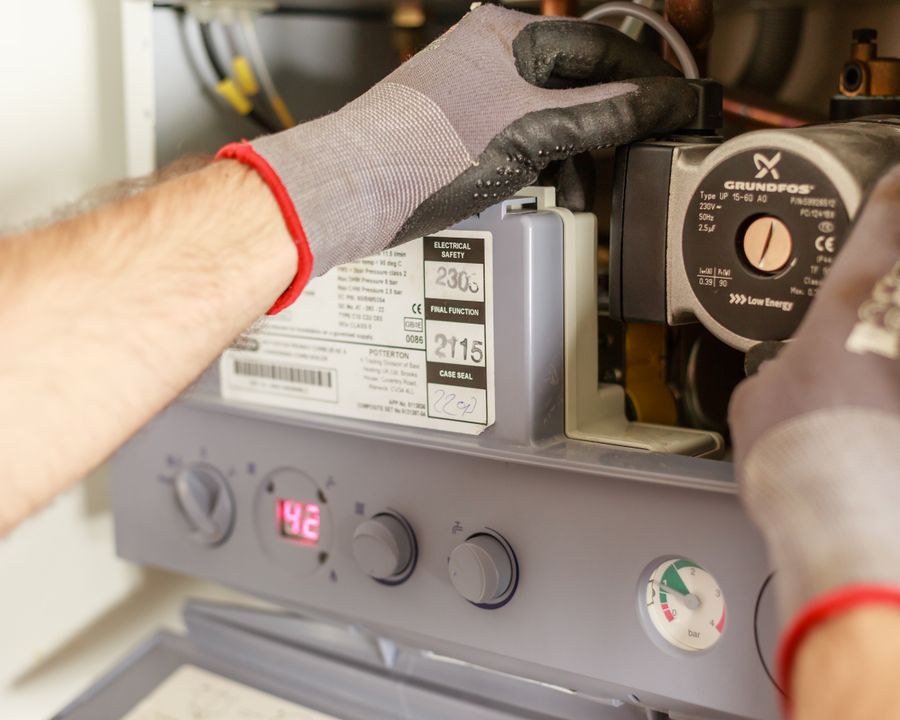
Connecticut is one of the states where heating oil is still common, especially in older homes and in towns without natural gas in the street. Many of those homes make hot water off the boiler instead of using a separate gas or electric tank. If your hot water problem started at the same time as a heating problem, or you don't see a regular water heater in the basement at all, this is probably your setup.
The three common setups
| System | How it works | Typical problems |
|---|---|---|
| Indirect-fired tank | An insulated tank with a coil inside. Hot boiler water runs through the coil and heats the domestic water. | Zone valve or circulator failure, aquastat or control issues, tank leaks |
| Tankless coil | A copper coil inside the boiler heats water as it flows through. | Scale-clogged coil, low flow, lukewarm water, mixing valve failure |
| Oil-fired water heater | A standalone tank with its own oil burner. | Burner and nozzle problems, ignition faults, tank corrosion, venting |
Signs something is wrong
- Hot water runs out quickly or never gets fully hot
- Hot water is fine in winter but weak in summer, or the reverse
- The boiler runs but the indirect tank stays cool
- Water pressure on hot taps is much lower than on cold
- Scalding hot bursts, which point to a failed mixing (tempering) valve
How the repair works
- Call and mention that your hot water comes from the boiler or an oil-fired tank. We connect you with a local pro.
- System check. The tech checks the boiler controls, aquastat, circulator or zone valve, and the mixing valve.
- Repair. Common fixes include replacing a circulator, zone valve, aquastat or mixing valve, descaling or replacing a tankless coil, and servicing an oil burner.
- Options. If the tank is leaking, or if the boiler is near the end of its life, the pro can lay out your options.
Upgrading from a tankless coil
A tankless coil forces the boiler to stay hot all summer just to make hot water, which costs a lot to run. Many homeowners switch to an indirect-fired tank, which lets the boiler rest between calls for hot water. Others separate hot water from the boiler entirely with a heat pump water heater, a gas unit where gas is available, or an electric tank. Our water heater replacement page explains the trade-offs.
Boiler-fed hot water is especially common in rural and older homes in towns like Colchester, Hebron, Plymouth and Haddam. It's one of the systems we cover through our Connecticut water heater repair service.
Frequently asked questions
What is an indirect water heater?
It's an insulated storage tank with a heat-exchange coil inside. Your boiler sends hot water through the coil, which heats the household water in the tank. It has no burner of its own.
Why is my hot water lukewarm with a tankless coil?
Tankless coils often get clogged with scale, or the mixing valve may have failed. Low boiler temperature settings and high demand can also cause it. A pro can test and descale the coil or replace the valve.
If my boiler breaks, will I lose hot water too?
Yes, if your hot water comes from an indirect tank or a tankless coil, a boiler failure stops both heat and hot water. That's one reason some homeowners move hot water to a separate unit.
Is an indirect water heater better than a tankless coil?
In most cases, yes. An indirect tank stores hot water so the boiler doesn't have to stay hot all summer, which usually lowers fuel use and gives better hot water supply.